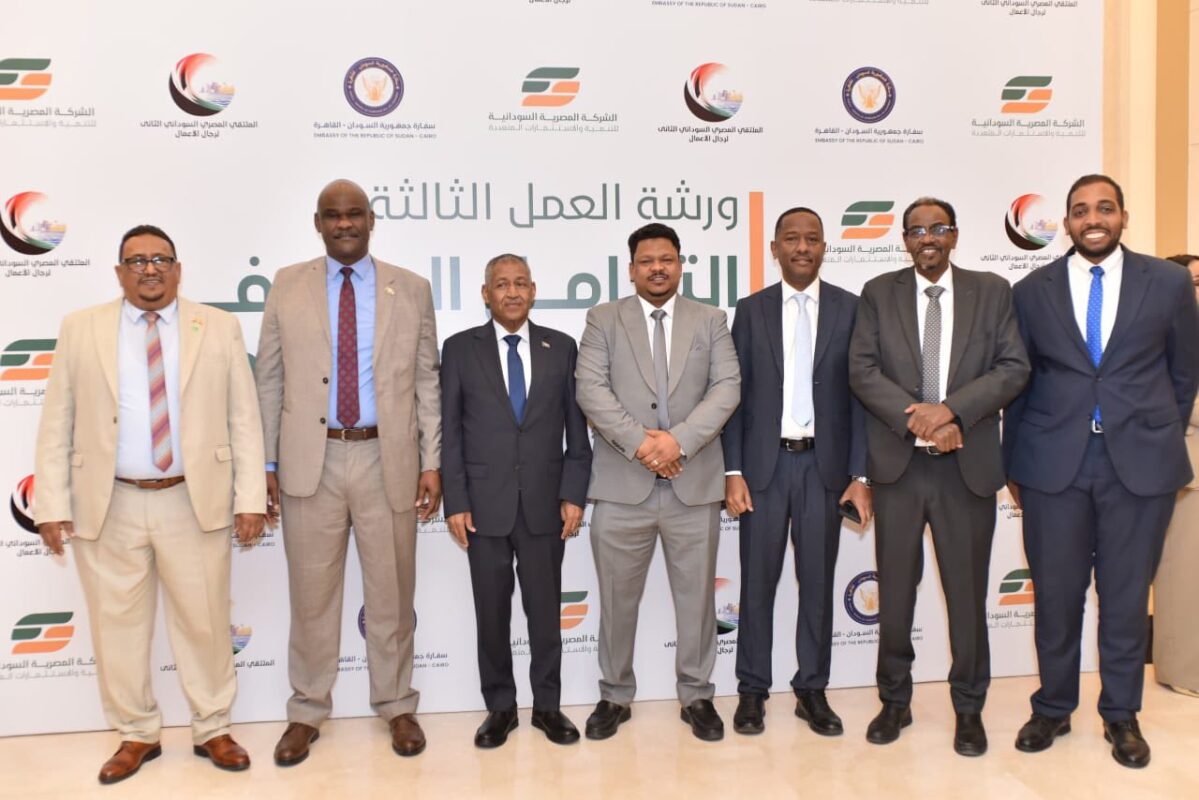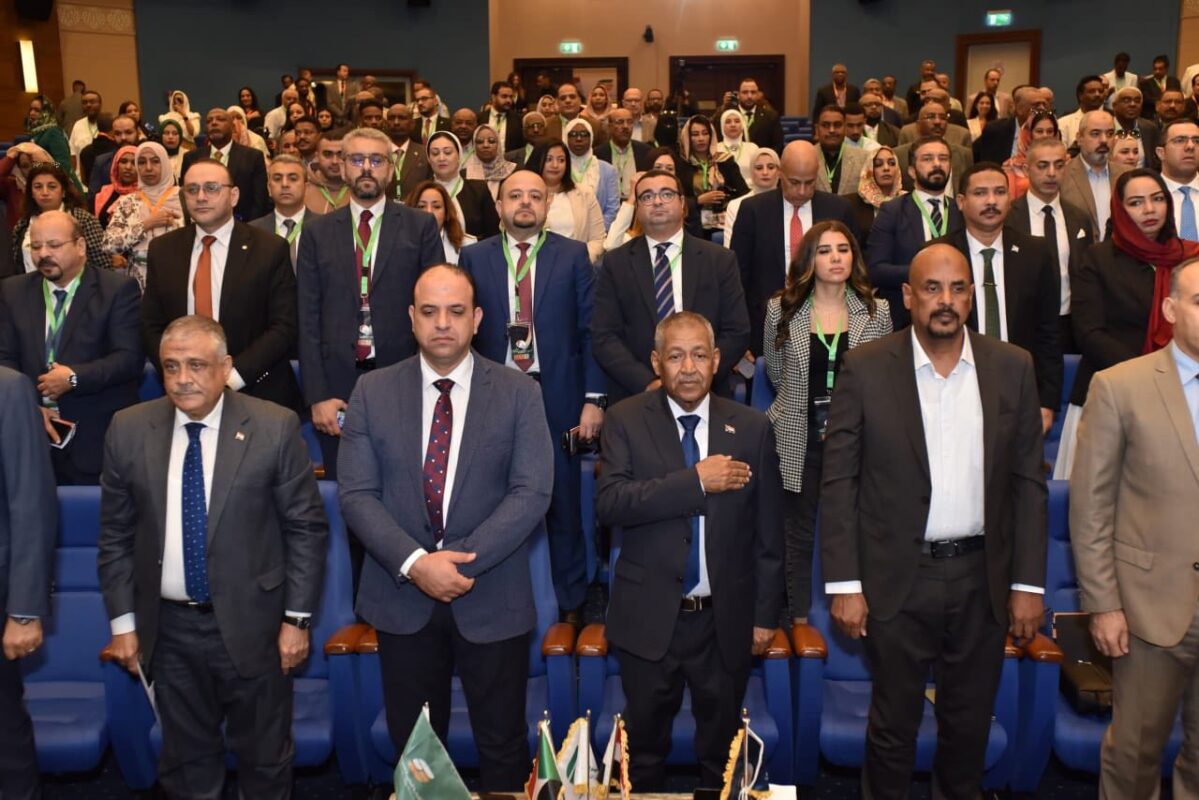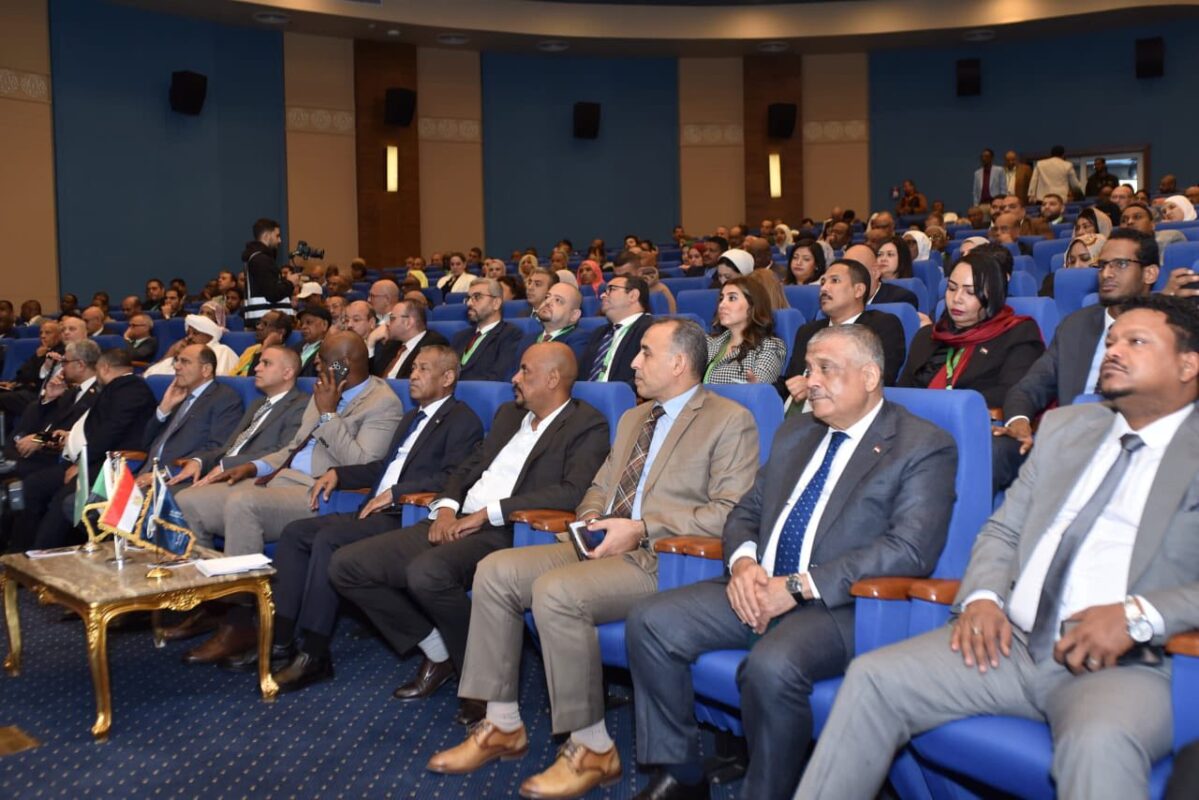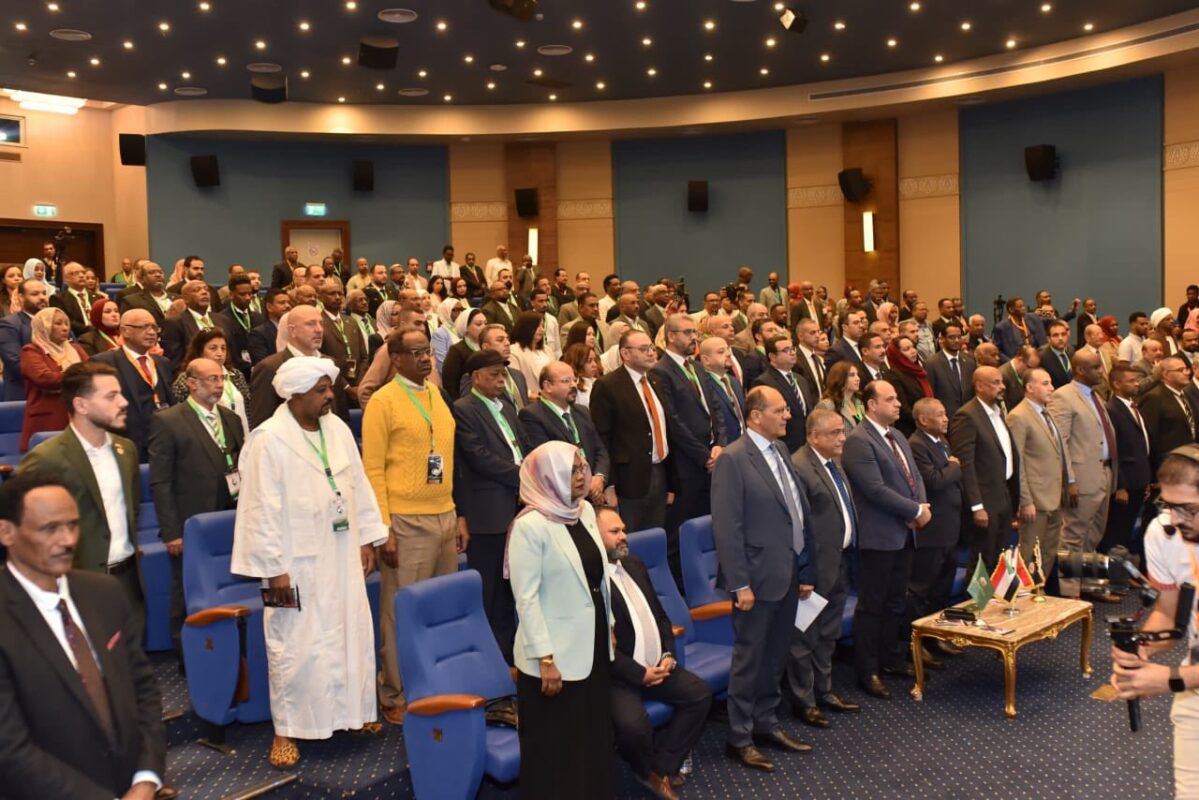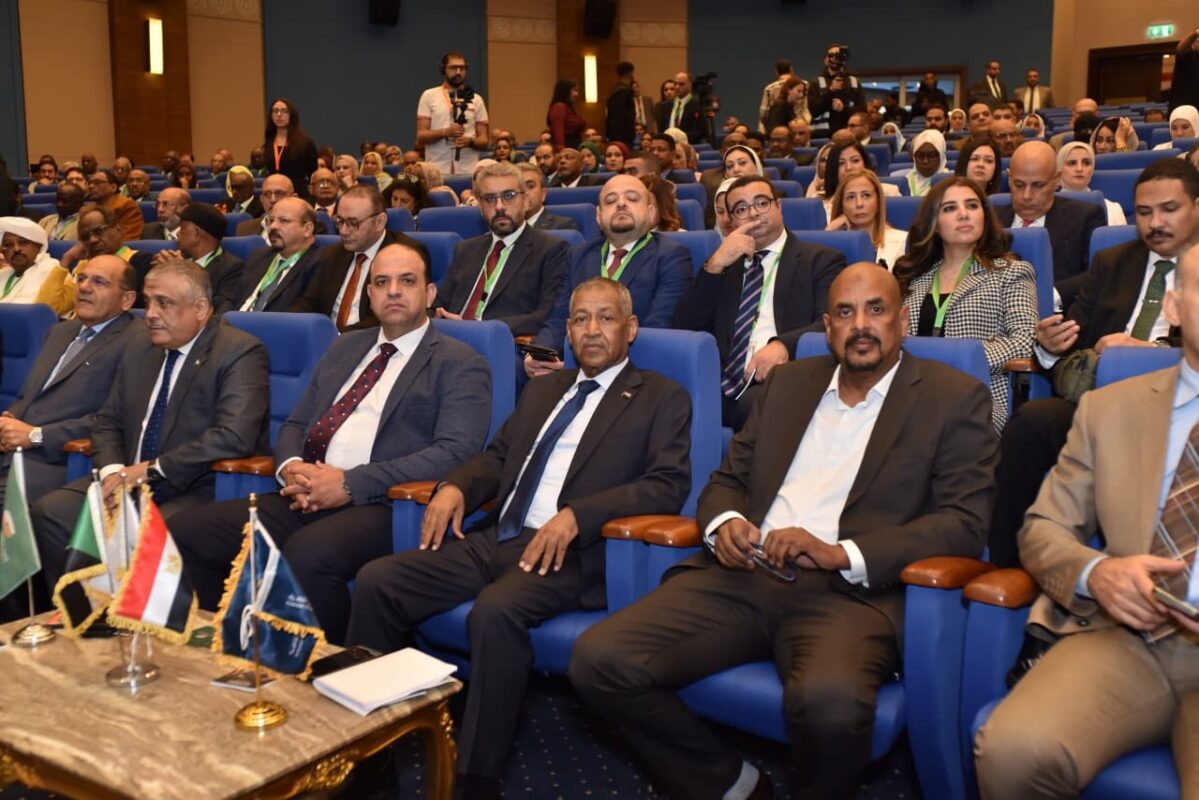




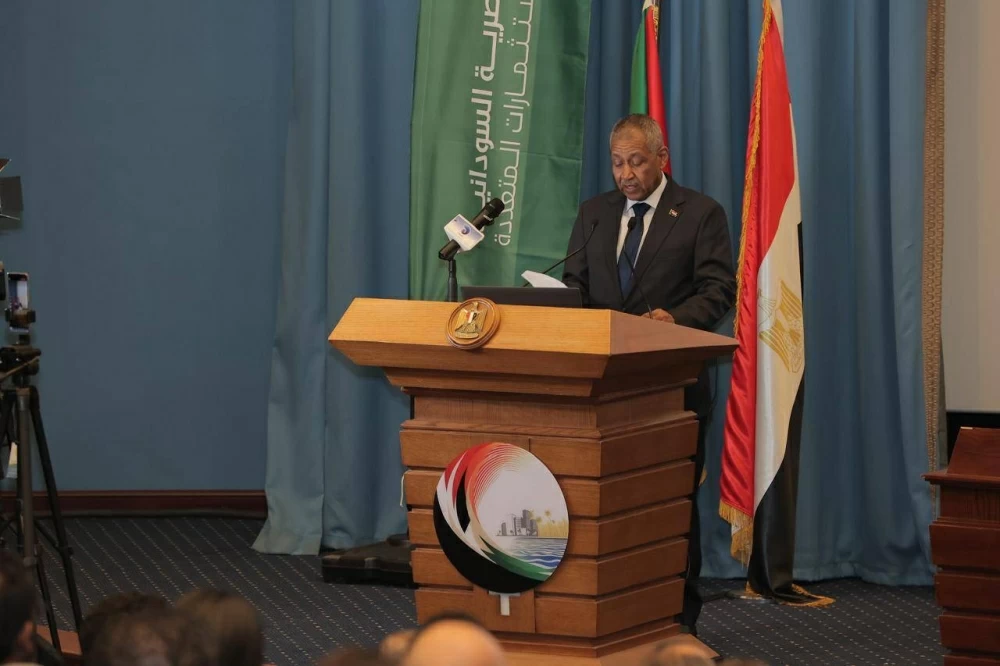
This morning, the third preparatory workshop for the Egyptian-Sudanese Businessmen Forum, held under the title “Banking Integration between Egypt and Sudan,” was launched. The event was attended by a number of Egyptian and Sudanese officials, including the Sudanese Ambassador in Cairo and numerous leaders from the Egyptian and Sudanese banking sectors
Ambassador, Field Marshal Emad El-Din Mostafa Adawi, Sudan’s Ambassador to Egypt and Permanent Representative to the Arab League, affirmed
that the Egyptian-Sudanese Businessmen Forum enjoys significant attention, follow-up, and support from the leadership of our two brotherly countries. He extended his thanks to the Egyptian Ministry of Foreign Affairs, the Central Bank of Egypt, and all institutions of the Egyptian banking sector for their cooperation and substantial support in ensuring the success of the third preparatory workshop for the Egyptian-Sudanese Businessmen Forum.
In his speech at the third preparatory workshop for the Egyptian-Sudanese Businessmen Forum, Ambassador Emad El-Din Adawi stated, “Today’s discussion on banking integration between the two countries reflects the scale of economic opportunities and potentials between Sudan and Egypt, which we always see as close and capable of contributing to achieving regional integration from a broader perspective. This integration relies on accelerating transaction processes and increasing the volume of interests and exchanges in a way that enables Sudan and Egypt to form a transformative force for the investment and business climate, supported by a banking environment based on automation and simplification principles, encouraging investors through its advantages, foremost among them the reduction of operational costs
Adawi pointed to the national efforts exerted by all Sudanese state institutions, including the Central Bank of Sudan, to ensure the recovery of the banking sector and restore confidence in the systems. This is being achieved through the adoption of specific goals and priorities aimed at providing technical and financial support to the banking sector, enabling it to overcome the repercussions of the war and ensure its role as an efficient financial intermediary.
He stated, “As I mentioned, these are national efforts stemming from effective and efficient policies by the Transitional Council of Ministers, headed by Professor Kamel Idris, who personally chairs the Economic Committee. He applies his internationally recognized expertise and contributions alongside local specialists to ensure the translation of these policies into successful economic programs and procedures. We also note the committee’s issuance of supportive and incentivizing decisions aimed at enhancing economic activity, opening production markets—especially those related to gold—combating smuggling operations, and strengthening foreign currency resources, all of which form part of the path toward economic reform and the protection of the national currency.”
He added, “We are also making increasing efforts to encourage our banks to strengthen their financial soundness, reduce non-performing financing rates, and ensure that capacity-building and the reform of regulatory and institutional frameworks include all stakeholders, including both banking and non-banking institutions.”
The Sudanese Ambassador to Egypt expressed his confidence that the workshop would address important and motivating topics, such as enhancing mechanisms to expand banking financing opportunities, assisting banks in providing funding for urgent economic sectors related to infrastructure and production, and encouraging the creation of financial portfolios to fund strategic and essential commodities as well as economic activities
He emphasized that all of this certainly requires effective partnerships, stating, “And if we speak of partnerships, they are with Egypt; if we speak of fraternal ties… they are with Egypt; and if we speak of the Nile Valley, our destinies are all linked to its flow
He stressed that in economic and banking partnership, there is no closer or safer partner than Egypt, stating, “The truth is that expanding banking activity requires considering ways to accelerate integration with our sister country, Egypt, whose extensive banking experience, regional and international partnerships, and reliance on business automation provide the necessary speed and support for decision-makers.
Dr. Nazmi Abdel Hamid, Chairman of the Board of the Egyptian-Sudanese Development and Multi-Investments Company, affirmed that the third preparatory workshop for the Egyptian-Sudanese Businessmen Forum represents the most important stage in the series of preparatory workshops for the forum, considering it the cornerstone on which all previous and subsequent recommendations will be based.
Dr. Nazmi Abdel Hamid stated, “This workshop is the backbone that supports all other components, as it addresses the sector without which no economy can function, no trade can succeed, and no industry can thrive: the banking and financial sector
He considered that there are moments in the course of relations between countries that are pivotal, transcending the limits of the economic concept to encompass the notion of historical relations, and this meeting is one of those moments.
The representative of the Egyptian-Sudanese Company affirmed that holding this workshop with such high-level participation from central banks, banking associations, financial sector institutions, and the Sudanese Embassy reflects a shared will and a deep belief that economic integration between Egypt and Sudan is now entering a stage of genuine maturity.
Dr. Nazmi Abdel Hamid expressed his gratitude to the Central Bank of Egypt and the Central Bank of Sudan
He considered their participation in the workshop a strong message that the financial sector in both countries is moving toward an unprecedented path of integration, and that through them, we are overcoming the challenges that have long hindered bilateral trade.
He stated, “We also extend our thanks to the banking associations in both countries, which over many years have borne the greatest burden in protecting financial stability, supporting banking institutions, and maintaining the bridges of communication between the private sector and banks.”
He continued, saying, “We must also appreciate the supervisory care and the important regulatory role played by the Embassy of the Republic of Sudan in Cairo. Since the very first workshop until this moment, the embassy has been the political and diplomatic anchor that facilitated everything—communication, coordination, follow-up, and arranging attendance—and served as the vital link bringing all relevant parties together under one umbrella.”
He emphasized that the presence of the Sudanese Embassy in Cairo in every detail reflects the magnitude of national responsibility toward this major economic project, and confirms that Egyptian-Sudanese cooperation is no longer seasonal or event-driven, but has become a sustainable institutional partnership.
Abdel Hamid explained that everything discussed in the previous workshops—ranging from food and pharmaceutical industries, reconstruction projects, supply chains, trade, and logistics—culminates here, at this workshop, at the banking sector, with all its details, challenges, and aspirations
He stated, “The most important question is: Can we create a financial bridge capable of supporting all this momentum? Trade cannot move without financing and official banking channels, manufacturing cannot expand without secure payment systems, and import and export cannot be completed without stable banking channels.”
Joint projects cannot succeed without tangible banking guarantees, logistics cannot function without a clear collection system, and reconstruction cannot progress without a banking system capable of managing and directing capital.
Abdel Hamid emphasized that this workshop is the crown jewel of the series of workshops, carrying within it the keys to solutions. He stated, “If we succeed in this workshop, we may have already succeeded in addressing most of the problems that hinder bilateral trade between Egypt and Sudan.”
He stressed that the greatest challenges are not the production of goods, the lack of companies, or weak demand, but rather transfers, financing, risk management, settlement guarantees, exchange rates, currency flow, banking correspondence, payment systems, and financial trust between institutions.
The representative of the Egyptian-Sudanese Company affirmed that Egyptian-Sudanese relations have entered a new phase in recent months—a realistic phase in which collective action takes precedence over individual efforts, and institutional commitment replaces bilateral relationships.
He said, “The holding of five specialized workshops over a period of two months, continuous and intensive meetings, government sponsorship from both countries, support from the embassy, participation from sponsors, and attendance by central banks,” adding, “All of this is not merely a series of events, but a clear declaration that we are in the process of building an entirely new system.
He pointed to the commitment of the Board of Directors of the Egyptian-Sudanese Company to transform the outcomes of this workshop into:
A comprehensive technical document with actionable recommendations.
To be presented at the forum’s general session on December 16, submitted to the relevant ministries in both countries, and integrated into the 2026 action plans.
It will be documented in a dedicated publication and transformed into practical pathways within the financial, industrial, and commercial sectors.
He emphasized that the current economic moment is unprecedented, with the entire world reorganizing its priorities, supply chains changing, and the global financial system being reshaped. Countries are seeking deeper partnerships, and regions are looking for sustainable stability. He stated, “At the heart of all this, the Egyptian-Sudanese relationship emerges as one of the most capable of being transformed into a strategic, integrated model in the region.”
He explained that experience has shown that the countries that have successfully built genuine economic integration are those that started with banks, banking systems, and the establishment of shared payment mechanisms.
From building financing systems capable of supporting trade, to creating a financial environment that protects investments, ensures currency stability, and facilitates transfers.
Dr. Nazmi Abdel Hamid stated, “Our goal today is not only to find solutions to existing problems, but to lay the foundation for a new generation of financial and banking cooperation between Egypt and Sudan—a cooperation based on institutions, legislative frameworks, banking mechanisms, mutual trust, and clear pathways that ensure the economies of both countries are capable of protecting their interests in a rapidly changing world.”